
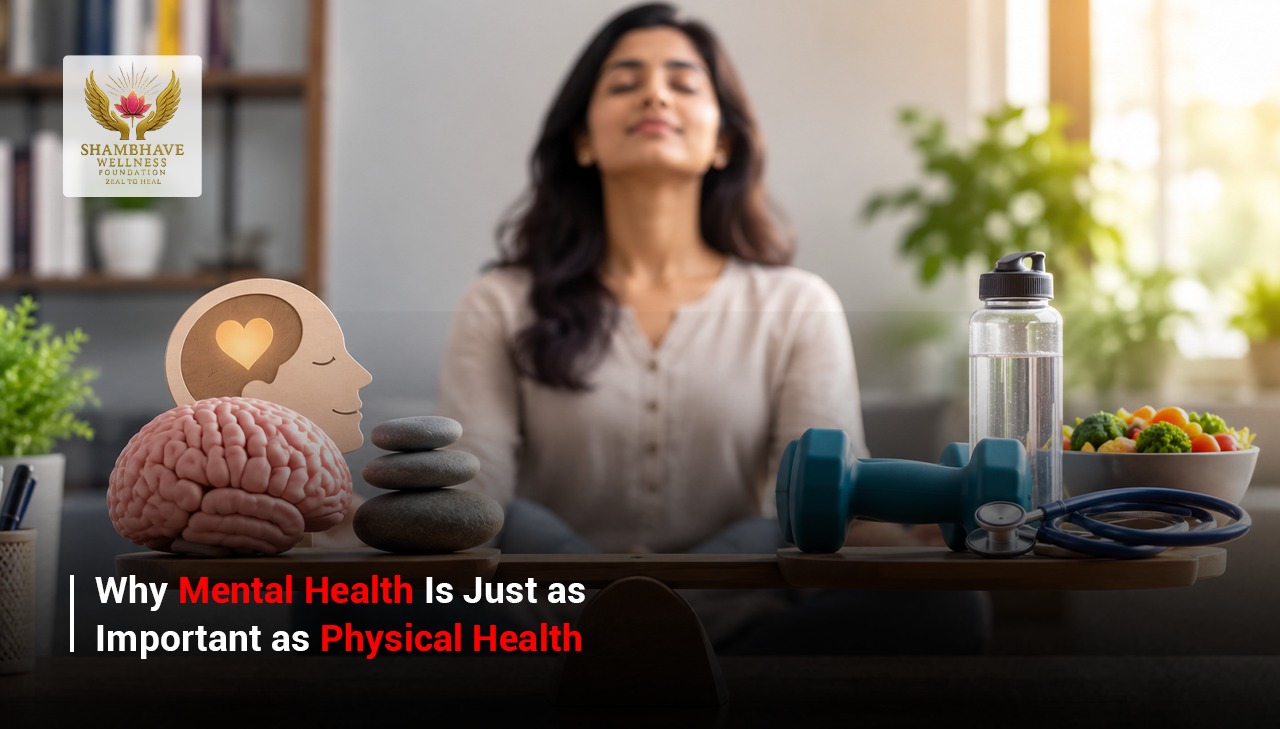
Mental health represents a condition of well-being that supports an individual's ability to prosper and succeed in everyday life. It includes emotional strength, a feeling of purpose, and the ability to form meaningful relationships that improve our overall quality of life.
But do we need to stop just there? - Indeed not!
The inextricable relationship between your mental & physical health
Both physical and mental well-being are vital components of your overall health, and they are intertwined. You can enhance your physical and mental well-being by concentrating on each other.
Although the physical and chemical functions of the brain play a major role in mental health, the brain is not the only source. A constant, reciprocal relationship between biology, environment, and life shapes mental health.
There’s no denying that our bodies are impacted by our mental health. Depression, for instance, raises the chance of getting long-term health conditions like diabetes, heart disease, and stroke. Conversely, our mental health can be negatively impacted by poor physical health. Mental health disorders are more likely to occur in people with ongoing or chronic medical health conditions such diabetes, cancer, and traumatic brain injury.
Also Read : How To Teach Children About Healthy Boundaries
Let's walk you through the statistical data as cited by UNICEF
- 1 in 10 people in India experience some sort of mental health conditions (approx. 10.6% of the population).
- 7.3% of young persons (18–29 years) face total mental illness.
- The NCERT Survey (2022) indicated that 11% of pupils felt anxiousness, 14% had severe emotions, and 43% suffered mood swings.
Additionally, about 20% to 28% of older adults suffer from depression or common mental health disorders, with the overall prevalence of psychiatric issues reaching up to 41% in community settings and over 64% in old-age homes.
The statistics are truly shocking. Millions of individuals in India suffer from mental disorders on a regular basis, but unfortunately, many continue to remain silent victims of such issues because of the stigma associated with mental health problems. Each statistic represents an individual and their lives need to be acknowledged and taken seriously. It is important to understand that mental health should not be considered as a sign of weakness and should receive the same attention as physical health.
Examples of Mental Health Problems:
The following are examples of different mental health problems and their corresponding challenges and symptoms.
Anxiety:
Anxiety is a leading mental health condition across the world. With some studies undertaken in this regard, it has been found that about one out of every three people suffers from an anxiety disorder during their life span.
Anxiety can be in the form of:
- Generalized anxiety disorders
- Social anxiety
- Separation anxiety
- Specific phobias and others
Depression:
A disorder that has the potential of having an extremely profound impact on one’s life is depression. According to NIMH, the symptoms include sadness, emptiness, irritability, feelings of guilt and extremely low self-esteem.
People suffering from depression often experience
- Difficulty concentrating
- Pain
- Sleep disturbances or
- Loss of appetite
The of the symptoms associated with depression that are threatening to life include those that relate to suicide. According to NIMH, suicidal behaviors and thoughts are the 11th leading cause of death in the United States, but the 2nd cause of death in people between 10-14 and 25-34 years of age and the 3rd leading cause of death among those aged 15-24 years.
Trauma :
A trauma is an event, the psychological effects of which can cause Post Traumatic Stress Disorder. The symptoms of Post-Traumatic Stress Disorder are flashbacks, nightmares, unwanted memories, and panic attacks. Though PTSD is mostly associated with war veterans, there are other kinds of traumas which could also result in PTSD.
Addiction:
The problem of addiction has also become very widespread recently, with fatal drug overdoses having increased quickly from the 1990s onward. Addiction is a complicated illness, one that often requires professional help for people to get over.
In India, comprehensive national data from the Ministry of Social Justice and Empowerment shows that alcohol is the most commonly used psychoactive substance (17.1% of adults), followed by cannabis (3.3%) and opioids (2.1%), with millions of citizens requiring active medical treatment.
Each mental health disorder has its own set of challenges — and its own set of treatments and few others have been mentioned below:
- Eating disorders - Anorexia Nervosa
- Mood Disorders - Bipolar Personality Disorder
- Obsessive Compulsive Disorder (OCD)
Warning SIgns & Risk Factors Associated With Deteriorating Mental Health:
There are cases where some mental health conditions are due to genetic predisposition, while some other conditions are acquired. There were various warning signs and other factors which are associated with mental health disorders.
Some warning signs of declining mental health are:
- Appetite alterations and disruption of sleep pattern
- Involvement in risky activities (acts of self-injury, acting-out sexually, eating disorders or other compulsions)
- Psychological distress (disturbing thoughts, stress, insecurity)
- Adverse effects on interpersonal relations (becoming isolated, arguments, etc.)
- Drug addiction
- Suicidal thoughts / attempts
Taking Care Of Your Mental Health:
Here are some tips to improve your mental wellness:
- Formulate a good support network: Reach out to people who know you well and are trustworthy and confide in them when you need assistance.
- Take care of yourself physically: Prioritize good sleep, exercise, eat properly, and avoid any toxic substances.
- Develop healthy coping techniques: Engage in practices such as yoga, mindfulness, or meditation in order to deal with stressful situations and change your thoughts. In case you observe that your coping mechanisms become unhealthy (e.g., substance abuse or avoidance of an issue), you can develop healthier ones through therapy.
- Acknowledge feelings of accomplishment: Make an effort to complete little things every day that will give you a feeling of achievement.
- Have a breather: Whenever something gets to be too much, you can try to take a step back from what you're doing.
- Try something new: Starting a new hobby or learning a new skill can help you change your mindset.
- Think positively: Appreciate what you have or start a gratitude journal.
Consider reaching out for professional help if you're experiencing warning signs of declining mental health.
Shambhave Wellness I Caring for MInds, Changing Lives
At the heart of Shambhave Wellness NGO is Dr. Amita Puri, an internationally acclaimed Clinical Psychologist, Clinical Hypnotherapist, Life Coach, and Angel Energy Healer. With over 30 years of experience, Dr. Amrita Puri has guided individuals from across the globe on journeys of self-discovery, healing, and empowerment. Her vision for the NGO is rooted in compassion: to extend her knowledge and healing expertise to underserved communities, schools, women, youth, and families who may otherwise never have access to such holistic care. Through her books, workshops, therapies, and NGO initiatives, she continues to inspire a movement where science and spirituality meet to nurture wholeness.
Also Read : Why Mental Health Support Should Be Accessible to Everyone: The Mission of Shambhave Wellness Foundation