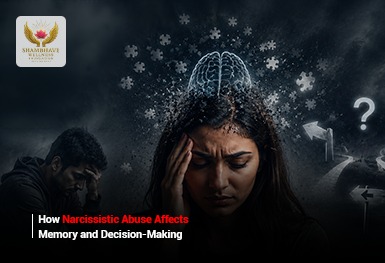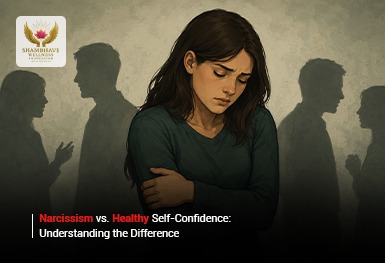


Narcissism is usually difficult to detect at the early stages of a relationship, but it is easily identifiable after some time. Warning signs of narcissism in marriage include one spouse always putting their needs before those of their partner, being devoid of empathy, and manipulating their way to getting what they want.
Fundamental Narcissist Behaviour:
Core behaviors that are found in a narcissistic marriage include signs like
Cycle of abuse: dramatic changes where you are idealized one minute and devalued the next
DARVO trick: when you call them out on their behavior, they deny it, attack you and turn the tables on you, making you the offender
Gaslighting: denying your behaviors to make you doubt your own reality
Blame shifting: passing the buck and making you feel like everything is your fault
Empathy deficit: an inability to sympathize with how you feel and an inability to share your own interests and feelings
Isolation and control: tracking your behavior, limiting your social interactions and eroding your support network
Signs That Depict You Are in a Narcissistic Relationship:
You Feel as Though It Is Your Fault
Narcissists always place blame on others, not only when things go wrong but also when it is their fault. A narcissist will never apologize because they never feel responsible for any action they take because of how narcissists view the people around them.
If your partner is a narcissist, they will never feel responsible for what they do and always place blame on you. Even if the situation is their fault, it is your fault, and anything negative in their life is your fault.
You Feel as Though You’re Always Being Condemned
Your partner constantly criticizes your looks. They may criticize you on the basis of how you look, how much you weigh, what clothes you wear, or even your hairstyle. They tease or ridicule you; they may do this behind your back or directly in front of you.
They tend to criticize other people, particularly those whom they consider inferior to themselves (meaning, those who are considered to be less attractive or financially endowed).
You Are Constantly Gaslighted
Someone who persistently refutes or dismisses facts that you already know to be true is fundamentally gaslighting you. This is often noticed in cases of dominating and manipulative relationships and is a common feature of narcissists.
Here are two examples of narcissist behaviour:
Resistance to facts: Your partner might say, "You just don't remember things correctly," regarding an event that actually transpired and which you are fully aware of. They gaslight you to believe that specific events never took place or that they acted in the way they did due to you saying or doing something previously.
Falsifying to enhance oneself: Your partner might lie about your conduct and bend the truth about what happened. You might start doubting yourself and thinking that you are losing it.
If they do that in the presence of other family members and friends, they probably will be forced to think there is something wrong with you and not your partner. It may be extremely hard for them to see what is happening behind the scenes because your partner may come across as a very likable person at first glance.
4. You get manipulated incessantly:
Your partner/spouse will make veiled threats throughout the partnership. Though the statements will be ambiguous, you will be aware that if you do not comply with their requests or demands, something wrong will happen to you.
Sometimes it's easier to conform than to disagree. In this way, the individual can manage and dominate their relationships by obtaining what they desire. People in such situations often lose touch with how things were before the manipulations began.
5. You Are Always Living Under A Cloud:
Do you feel like you’re perpetually under someone’s thumb, not knowing when your partner will lash out at you or just start being moody?
Usually, it’s like this: everything is going okay until something trivial triggers your partner, and they snap at you. Even something as petty as seeing another person at work being appreciated while feeling unappreciated yourself can trigger a narcissist. This is what is called narcissistic fury.
You definitely feel like you have truly lost yourself because now all your words, actions, and choices depend on keeping your narcissistic partner satisfied.
How Can Narcissism Impact Your Relationship:
In fact, research always emphasizes the negative impact of narcissism on relationship satisfaction. For example, a study conducted in 2024 has found that narcissism can cause multiple problems in couples' relationships, such as emotional manipulation and a lack of empathy.
These problems may stem from the facts that narcissistic people tend to use various manipulations in order to keep the upper hand, including:
Gaslighting
Demeaning someone silently
Blaming one’s partner for each misunderstanding
Moreover, narcissists may want to dominate in their romantic relationships. The evidence to support the above idea includes multiple scientific papers, according to which narcissism can be perceived as a form of manipulation which causes the loss of autonomy and an imbalance of power.
What's more, one of the defining characteristics of narcissism is a lack of empathy. In general, a person is incapable of understanding the emotions of his/her partner, which may cause isolation and neglect. Thus, the lack of emotional connection may destroy a relationship.
At last, emotionally dependent partners may be especially susceptible to the effects of narcissism. As research shows, narcissistic people tend to take advantage of their dependence, which may lead to repeated cases of psychological abuse.
What Steps Can Take If You're in a Narcissistic Marriage:
Having an affair with a narcissist can affect your well-being for a very long time. In case your partner treats you emotionally abusive and refuses to stop, then it's high time that you reevaluated your relationship.
Also, if you choose to end the relationship, make sure you get a support system ready—a group of people that you would trust and open up to. It could be your friends, family, or therapist.
If you choose to stay in the relationship with the narcissist, you should:
Seek therapy and take support from outside.
Establish boundaries and keep them.
Write down any conversations and events to avoid being gaslit.
Try to be calm and assertive.
At work, try to avoid gossip although you may want to vent.
Educate yourself on the subject matter of narcissism.
About Shambhave Wellness:
At Shambhave Wellness, a holistic approach is offered towards mental and emotional wellness that helps you to obtain insight into yourself, restoring and sustaining balance and clarity in your life.
With the guidance of Dr. Amita Puri, an internationally renowned clinical psychologist and a pioneer psychotherapist, we use psychological sciences along with subconscious and holistic methods of healing to help people achieve deep-rooted awareness.
With experience spanning over three decades , we aim to work towards helping you achieve mental clarity, emotional strength, and harmony in your life.